As kids, we’d pile into the family wagon and head south. It was as easy as that. The only hard part was getting up before dawn so we could make it from our home in South Texas to Saltillo, Mexico by nightfall. That’s all there was to it. Just get in and start driving. Go past Baffin Bay, the Nueces River, and then cross the bridge over the Rio Grande into another country. Once there, we enjoyed friendly interactions with our Mexican counterparts: Moms and Grandmoms, kids and teens, shop and salon workers, hotel and restaurant workers, police officers, taxi drivers, and the like. Later, as teenagers, Mexico provided an easy surfing adventure. My parents didn’t allow me to go, but some of the kids from my high school would stack their boards atop an old International, roll down the windows and drive all day and night to reliably surfable waves in Punta de Mita, Nayarit, Mexico. Their counterparts tried out their English on the Norte Americanos. The teenagers from the U.S. mashed Spanish and English to communicate back. These days, Texans rarely take road trips into Mexico anymore, but still the kinship remains. Don’t get me wrong; not every Texan nor Mexican wants or likes this family-like alliance. But I do.
My family has always lived in Texas. Our skin is brown, and we speak both English and Spanish; after all, Texas was once Mexico. My characters are brown like me. Some are white like my friends and neighbors. Some speak Spanish; some speak English. Some speak both languages as well as Spanglish. I write narratives about the lives of these people. Like life, my characters sometimes dig into their past to explain the motivations of their present circumstances. As a writer, I tell my stories in a linear fashion as much as possible, not dwelling too much in flashbacks. It’s a balancing act: going back and forth between past and present. I don’t want to lose my readers by bringing the present story to a standstill. My point-of- view is generally third person, past tense, told from two or three points of view. My current work-in-progress is told in third person, present tense, but I surprised myself when I decided to change it first person! Maybe I’ll change it back. Time will tell.
Texas/Mexico kinship is one of the themes that runs through both my novels. The title of my 2017 book is Pura Vida. Pura vida translates to pure life, a dicho (Mexican saying) that encapsulates the predilection for accepting life as it comes. Not fighting life’s circumstances, but rather, taking the bad with the good, never being surprised by the bad, always knowing it’s there waiting to surface. Within the theme of kinship is shared geography and a natural back and forth across the border. In Pura Vida, some Texans and Mexicans cross to take care of family business, but two characters cross in order to cause harm.
My 2023 thriller, Bring the Light, like my earlier novel, features Sister Bridget, a Mexican religious sister, who’s also a naturalized American citizen. She is a midwife who lives in the United States, but often crosses the border to help out at a women’s clinic in Mexico. A young pregnant Mexican girl survives a kidnapping then seeks out Sister Bridget in Texas. But she is apprehended while illegally crossing the border. Her baby is born in the U.S. and is placed in foster care. An American couple and others help the girl “kidnap” her own baby and escape back across the border to Mexico.
I also include the theme of crossing borders in my current work in progress. It is a mystery about a fictitious cold case murder at a Texas university. At the center of the case is a roommate whose family was slaughtered by a drug cartel in Mexico when she was five years old. Now, the character is a college student, and her story crosses over to Texas. The connection of Texas and Mexico is a natural kinship since they were once one.
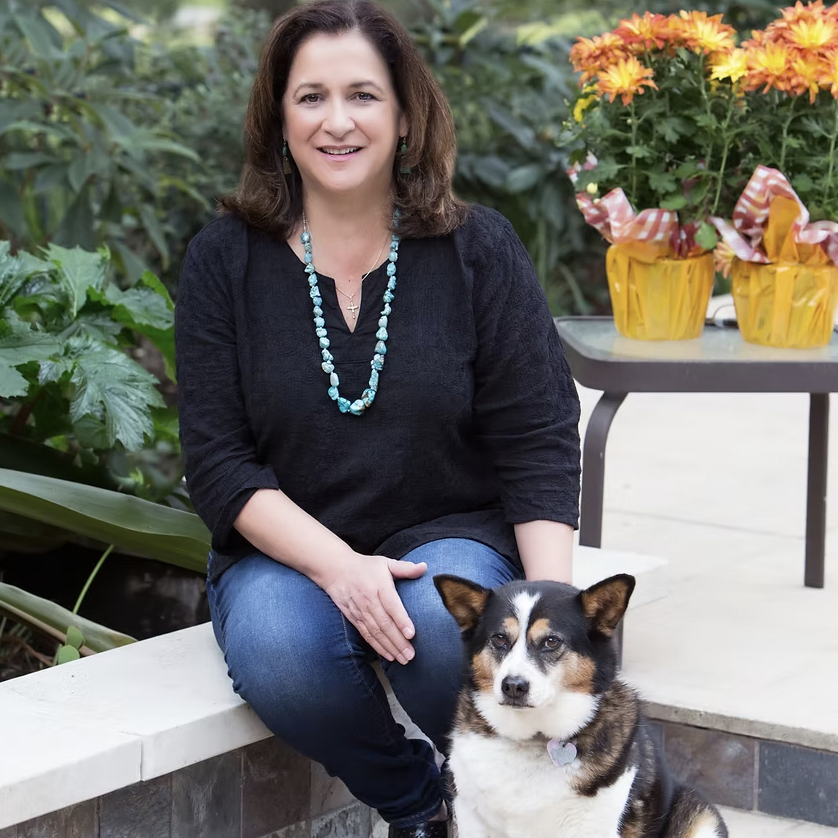
 Annette Montez Kolda